Barefoot Running for Beginners: How to Start, What to Expect, and Why Your Feet Will Transform
Every runner has had the thought: "What if I just took my shoes off?" Maybe you saw someone running in those toe shoes. Maybe you read Born to Run. Maybe you just looked down at your $180 running shoes and wondered if 2 million years of human evolution got it wrong.
It didn't. Your feet are extraordinary running machines. But transitioning to barefoot running requires patience, humility, and a willingness to start over. Here's how.
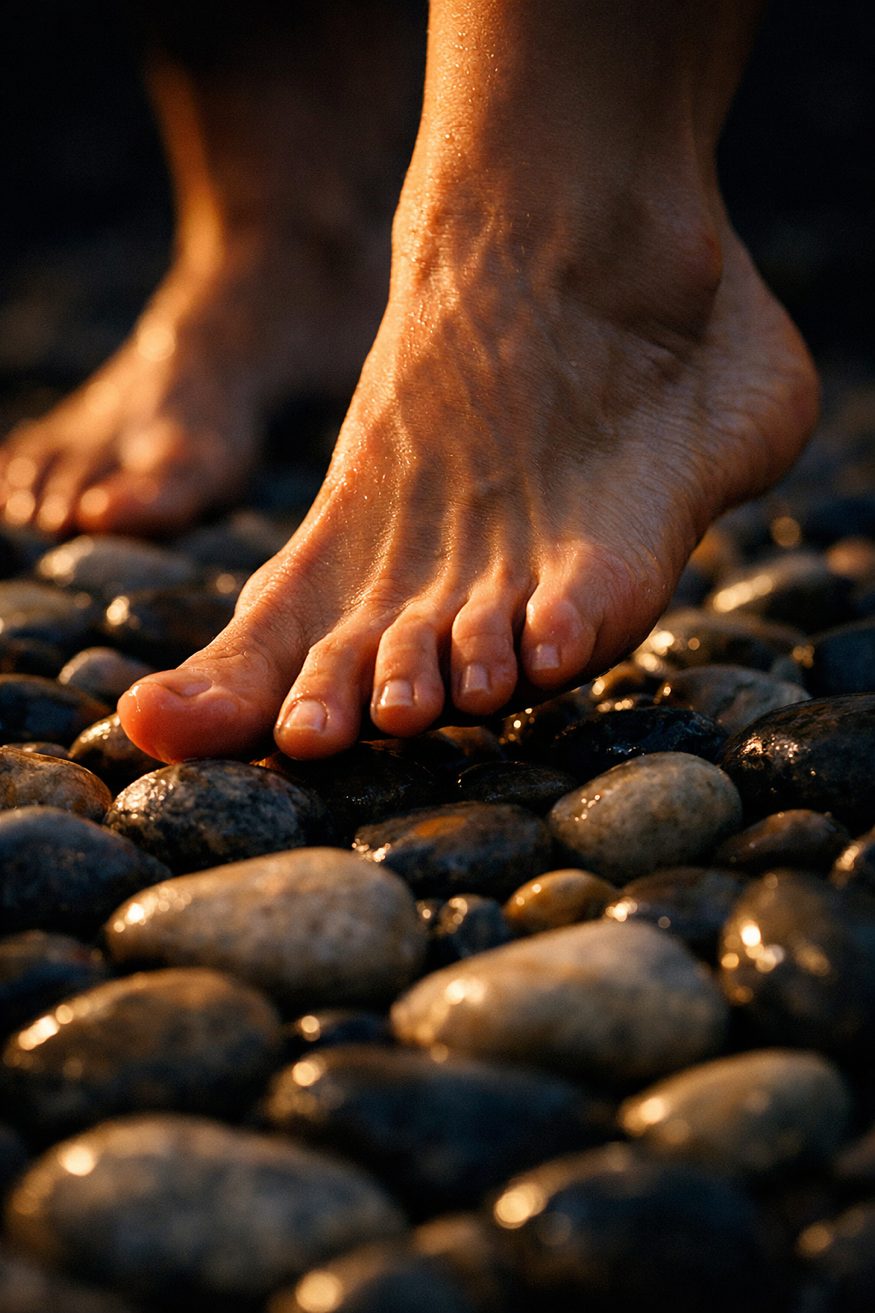
Why Barefoot Running Works
Modern running shoes do three things that change your natural running mechanics: they elevate your heel (creating a forward lean), cushion impact (removing sensory feedback), and narrow your toes (reducing stability). Remove all three and something remarkable happens — your body self-corrects.
Barefoot runners naturally land on their midfoot or forefoot instead of their heel. This shifts impact absorption from your knees and hips to your calves and Achilles tendon — structures that evolved specifically for this purpose. The result is lower impact forces, shorter stride length, higher cadence, and a more efficient gait pattern.
The 12-Week Transition Plan
Weeks 1-2: Walk Only
Do not run. Walk barefoot on smooth surfaces — sidewalks, tracks, short grass. Start with 10 minutes and add 5 minutes each session. Your soles need to toughen and your calves need to adapt. This is the foundation. Skip it and you'll get injured.
Weeks 3-4: Walk + Light Jog Intervals
Alternate 2 minutes walking with 1 minute of easy jogging. Total barefoot time: 20-30 minutes. Focus on landing softly — you should barely hear your feet touching the ground. If it's loud, you're heel-striking.
Weeks 5-8: Build Running Volume
Gradually increase the running intervals. By week 8, aim for 15-20 minutes of continuous barefoot running on smooth surfaces. Your calves will be sore — this is your body building the spring-loaded tendons that cushioned shoes had made dormant.
Weeks 9-12: Surface Variety
Introduce varied surfaces — gravel paths, trails, grass. Your feet will become incredibly adept at reading the ground and adjusting in real-time. This is proprioception at its peak. By week 12, you'll feel like you have superpowers compared to running in shoes.
The number one mistake is doing too much too fast. Your cardiovascular system is ready to run. Your feet are not. Respect the transition. Your tendons, ligaments, and foot muscles need time to rebuild strength that shoes have stolen from them.
Technique Cues
- Land under your hips, not in front of them. Overstriding is impossible barefoot — the pain teaches you immediately.
- Short, quick steps. Target 180 steps per minute. This naturally reduces impact.
- Quiet feet. If you can hear your feet slapping, you're doing it wrong.
- Relaxed toes. Don't grip. Let your toes spread and absorb naturally.
- Eyes up. Trust your feet. They can feel the ground without you staring at it.
How Alive Are Your Feet?
Take the free 2-minute Sole Score assessment. No signup required.
Take the Test