The Best Slides for Foot Health in 2026: A Comprehensive Ranking
The recovery slide market has exploded. Everyone from luxury leather brands to athletic companies to direct-to-consumer startups is making a slide now. But most of them are just flat foam with a logo on top. They look good. They feel soft. And they do absolutely nothing for your feet.
We evaluated the top slides on the market across five criteria that actually matter for foot health: arch support, footbed material, proprioceptive activation, build quality, and technology integration. Here is how they stack up.
What Makes a Slide Good for Your Feet
Before we rank anything, let us establish what actually matters. A slide that is good for your feet does three things: it supports your arch without doing the work for it, it provides sensory feedback to your plantar surface, and it is made from materials that respond to your foot over time rather than compressing into nothing.
The worst slides are the ones that feel amazing in the store — ultra-cushioned, pillow-soft, zero texture. These are the foot equivalent of lying in bed all day. Comfortable in the moment, catastrophic over time. Your foot muscles disengage, your arch collapses, and your proprioceptive pathways go dormant.
Tier 1: Best for Foot Health
PLANTR Slide — $295
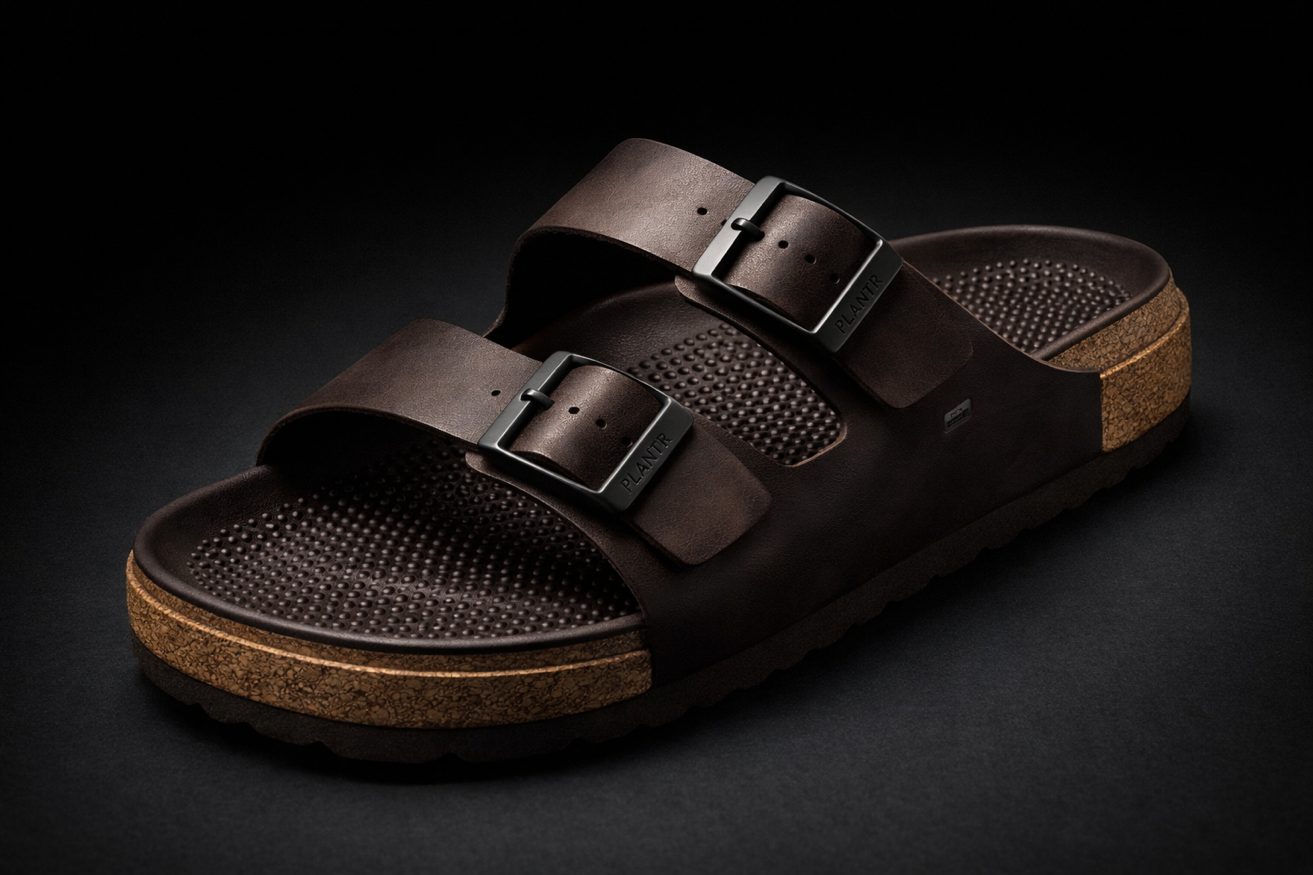
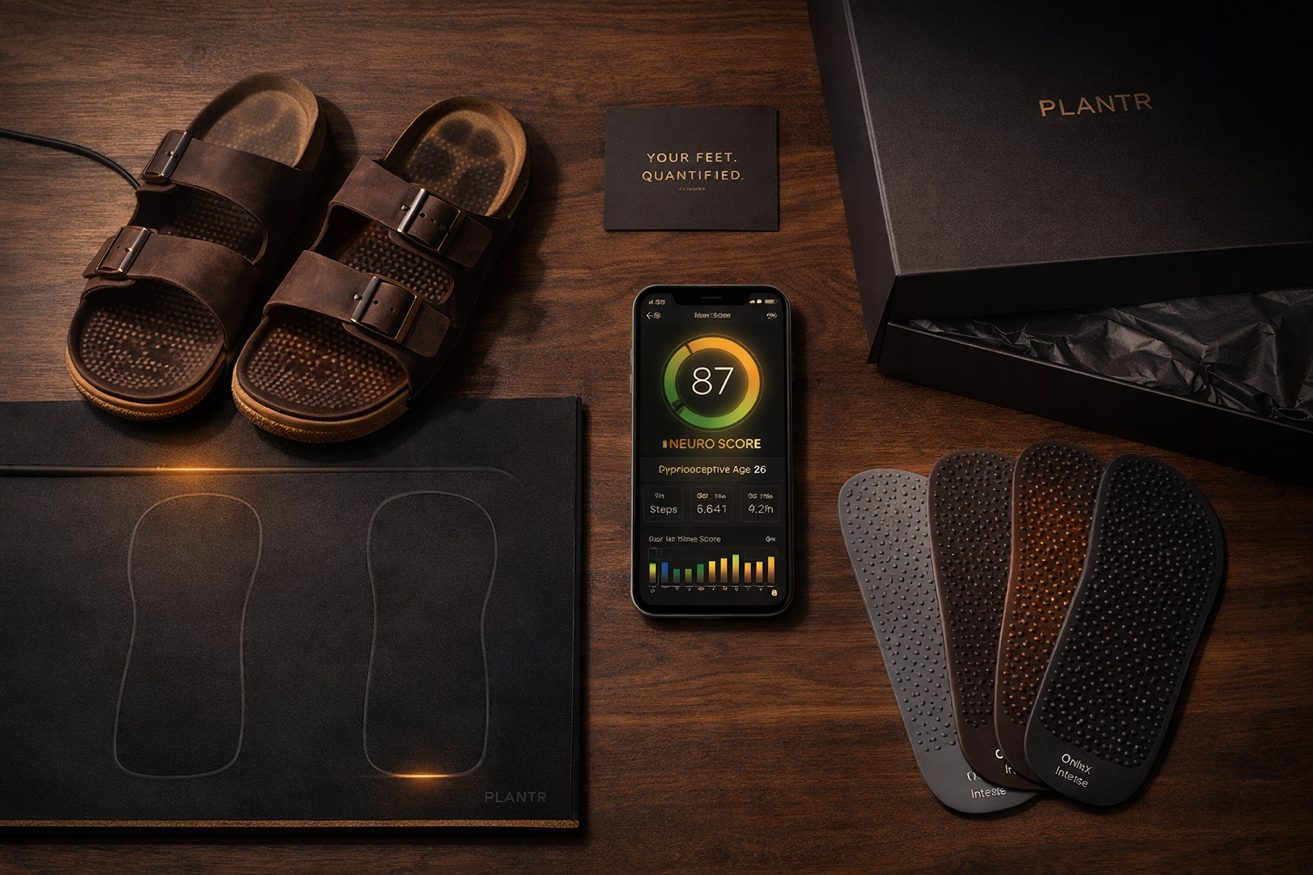
Full disclosure: this is our product. But we built it specifically because nothing else in this category existed. The PLANTR Slide combines a 4-zone proprioceptive textured footbed with 22 embedded piezoelectric pressure sensors, NFC sync, and a Portuguese cork midsole. It is the only slide that actively stimulates your nervous system AND tracks the data. The cork molds to your foot over time while maintaining firm support. The texture keeps your mechanoreceptors firing with every step. Nothing else comes close on the technology front.
Best for: Biohackers, longevity enthusiasts, athletes who track everything, anyone serious about foot health as a daily practice.
Cork-Footbed Slides (Premium Tier)
The classic two-strap cork-footbed slide remains one of the best options for passive foot health. The contoured cork footbed provides excellent arch support while allowing natural toe splay. The firmness of cork means your foot muscles stay engaged rather than sinking into foam. The suede lining adds mild texture. These have been the gold standard for decades for good reason.
Best for: Daily wear, anyone transitioning from cushioned slides, people who want low-effort foot health improvement.
Tier 2: Good, With Limitations
EVA Recovery Slides (Athletic Brands)
The thick EVA foam slides from major athletic brands are everywhere right now. They are lightweight, waterproof, and easy to clean. The arch support varies from decent to nonexistent depending on the model. The main issue: EVA compresses over time and provides zero proprioceptive stimulation. Your feet feel cushioned but learn nothing.
Best for: Post-workout shower slides, beach days, casual wear where foot health is not the priority.
Leather Slides (Fashion Brands)
Premium leather slides from fashion houses look incredible and the leather footbed does mold to your foot somewhat. But most have flat footbeds with no arch contour, and the smooth leather provides minimal sensory feedback. Style over substance from a foot health perspective.
Best for: Looking great. Not much else for your feet.
Tier 3: Avoid for Foot Health
Memory Foam Slides
The worst option. Memory foam compresses completely under body weight, provides zero arch support, creates a warm environment that promotes bacterial growth, and delivers absolutely no proprioceptive feedback. Your foot sinks in and your muscles shut off entirely. The initial comfort is a trap.
Best for: Nothing. Throw them away.
The best slide for your feet is the one that makes your feet work, not the one that lets them rest. Comfort and health are not the same thing.
What to Look For
- Firm footbed material — cork, hard rubber, or textured EVA. Not memory foam.
- Contoured arch — your arch should feel supported without being forced into a position.
- Wide toe box — your toes should splay naturally, not compress.
- Some texture — any surface variation is better than smooth flat foam.
- Quality materials — genuine leather, natural cork, durable outsoles.