Smart Insole Technology in 2026: Where the Industry Is and Where PLANTR Goes Next
Smart insole technology has been a research curiosity for over a decade. University labs have built remarkable prototypes — Ohio State created a solar-powered sensor insole, Georgia Tech demonstrated a 170-sensor pressure array, and MIT explored graphene-based flexible sensors. But almost none of this technology has reached consumers in a form they would actually want to use.
The State of the Industry
Most smart insole products in 2026 fall into one of two categories: clinical gait analysis tools that cost thousands and require laboratory conditions, or consumer gadgets with limited sensors and clunky companion apps that provide minimal actionable insight. The gap between research capability and consumer experience is enormous.
What PLANTR Does Differently
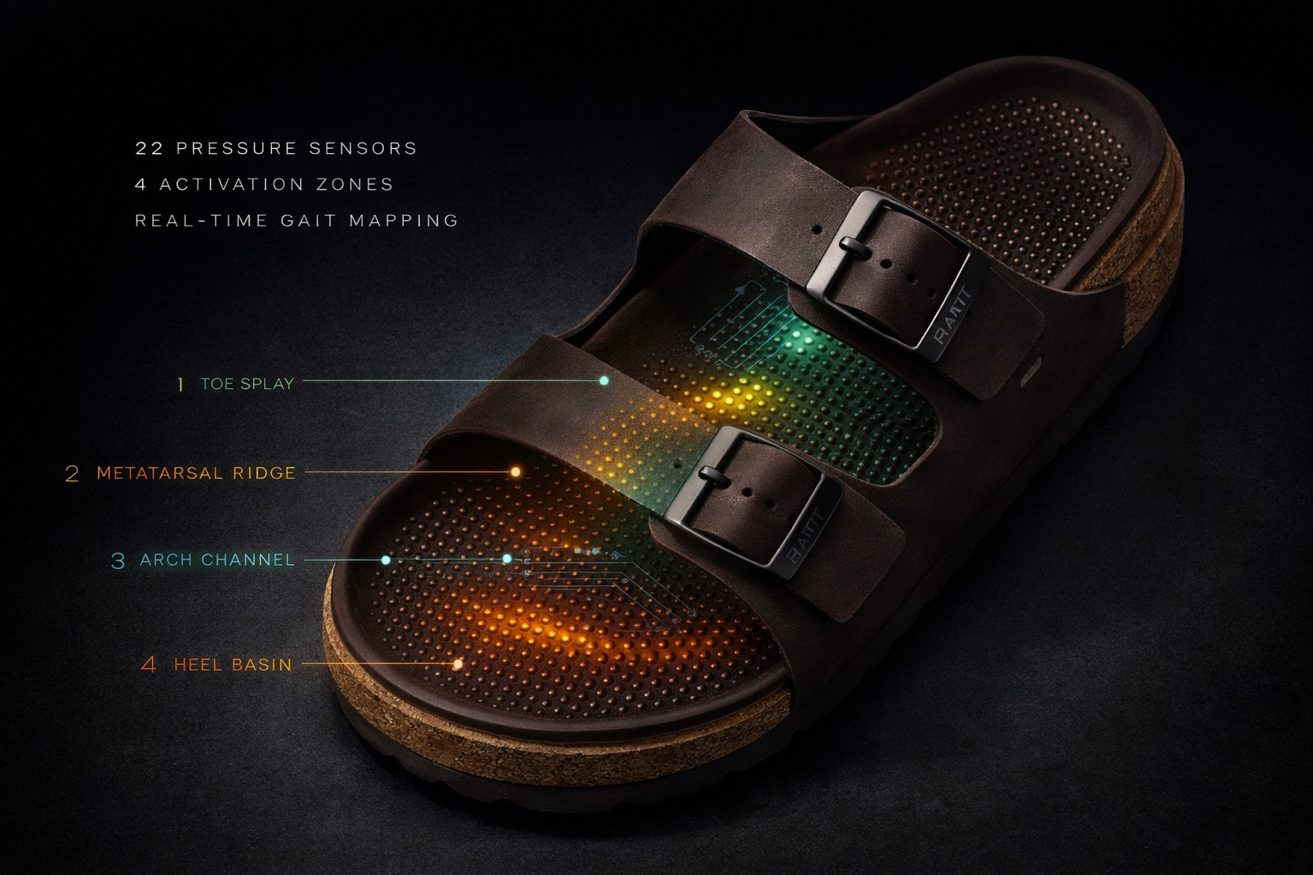
PLANTR approaches the problem from the opposite direction. Instead of trying to miniaturize a clinical gait lab into an insole, PLANTR starts with a product people already want to wear — a premium recovery slide — and embeds just enough sensor technology to generate meaningful, actionable health data.
The 22-sensor array is deliberately constrained. More sensors would increase cost, complexity, and power consumption without proportionally increasing the quality of insight. Research by Stetter et al. demonstrated that strategically placed sensors achieve classification accuracy comparable to dense arrays at a fraction of the complexity.
The Form Factor Advantage
The most important innovation in PLANTR is not the sensors — it is the slide itself. A recovery slide is something you put on every day when you get home. There is no behavior change required. No remembering to insert an insole. No charging a separate device. The technology disappears into a product you already want to use.
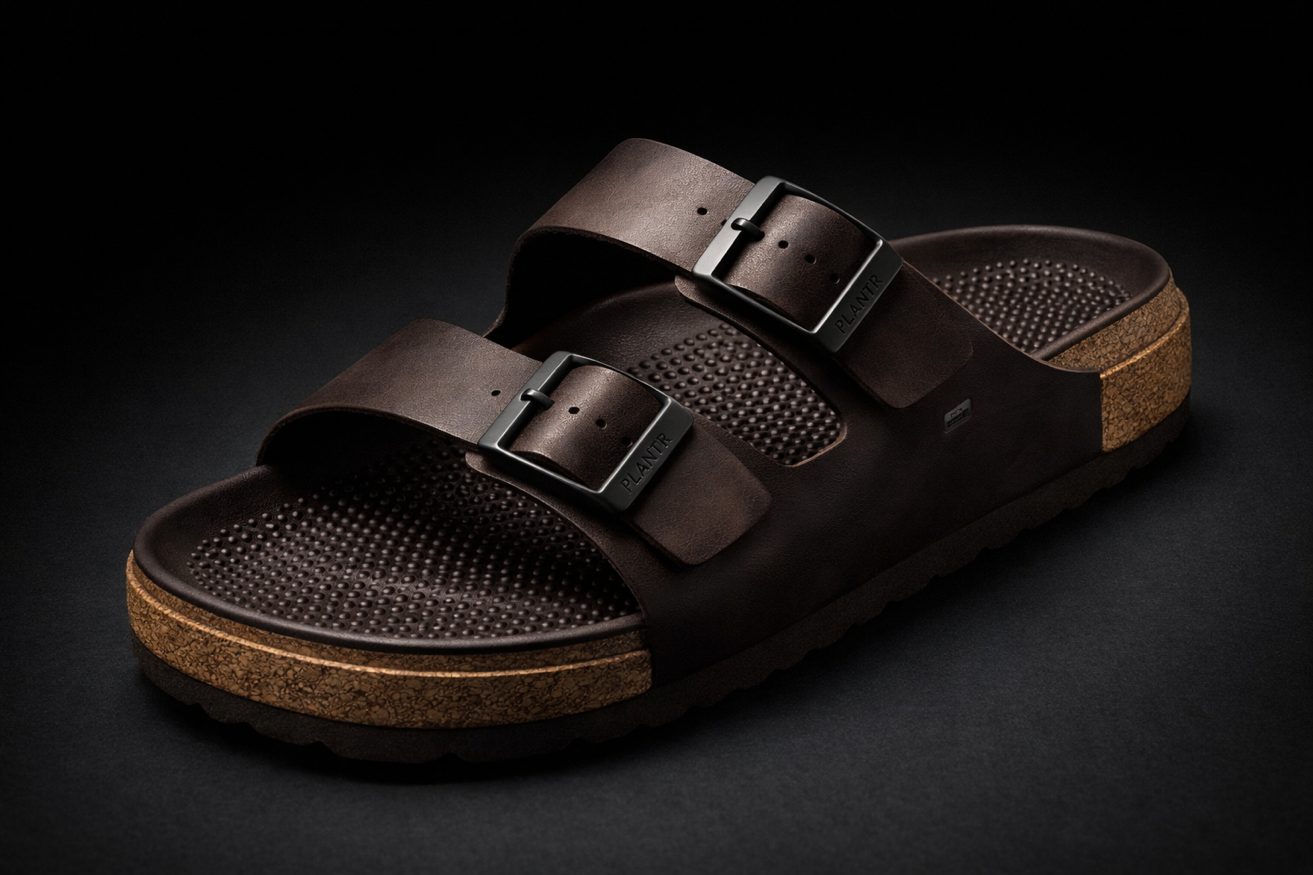
The future of smart insole technology is not more sensors. It is better integration — technology that disappears into products people already love, generating data without friction.