Why I Stopped Wearing Shoes at Work and What Happened to My Body
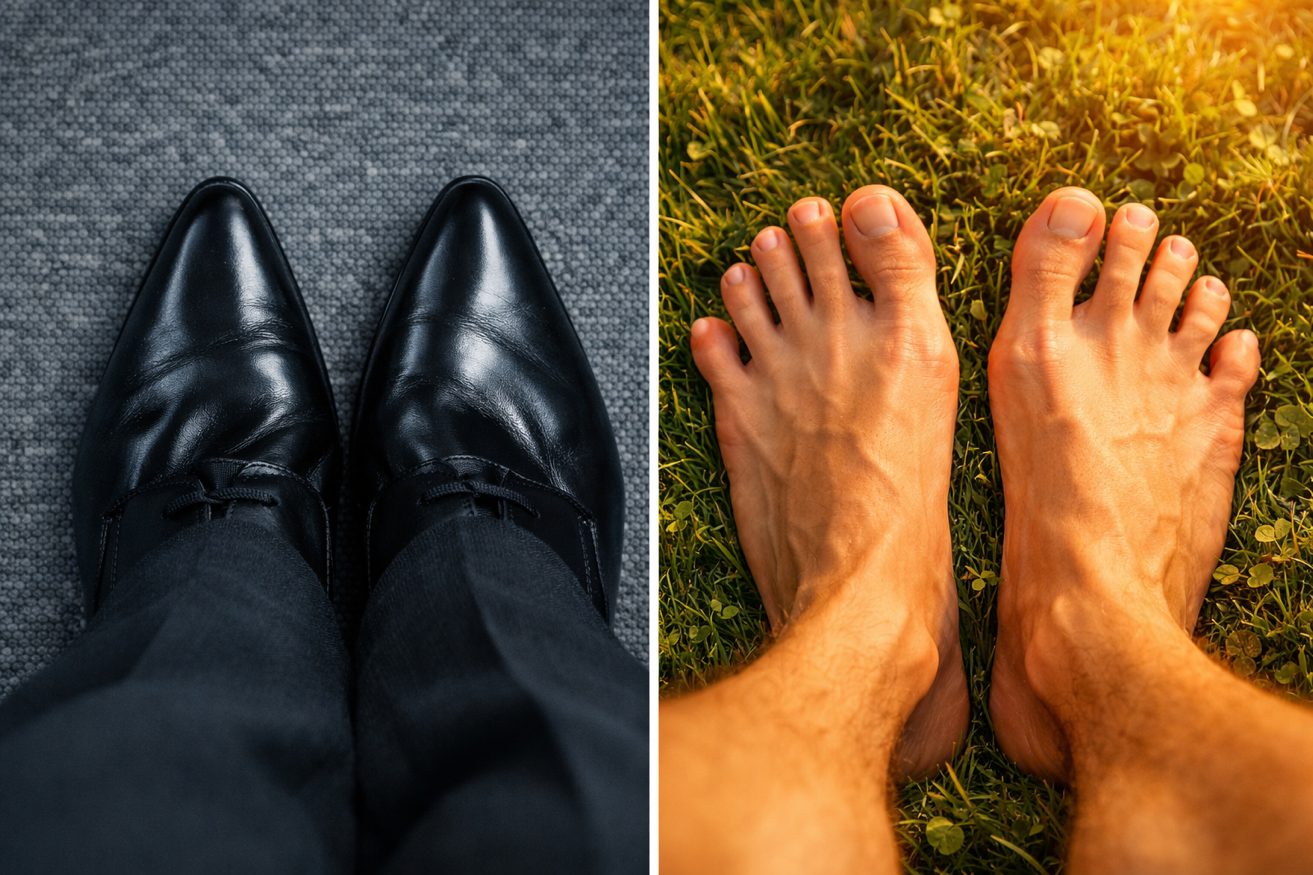
I used to scramble for my shoes every time someone walked up to my desk. That awkward fumble — toes curling, hunting for the opening of my slides with one foot while maintaining eye contact with a coworker — was a daily ritual I dreaded.
Then I stopped caring. And something remarkable happened.

The Scramble That Changed Everything
It started on a Tuesday. Someone asked me a question while I was deep in a spreadsheet, both feet tucked barefoot under my chair on the cool office floor. I stood up to discuss it. No shoes. Full barefoot. And you know what happened?
Absolutely nothing. They didn't look down. They didn't comment. They asked their question, I answered it, and they walked away. My feet were completely irrelevant to the interaction.
That was the moment I realized the "stigma" of being barefoot at work existed entirely in my own head.
What Happened Over 90 Days Without Shoes at My Desk
Once I committed to staying barefoot at my desk — no more scrambling for shoes when someone approached — I started noticing physical changes that genuinely surprised me:
Week 1-2: Sensory Awakening
The carpet under my desk suddenly had texture. I could feel the weave pattern with my toes. The cool tile in the bathroom hallway felt almost electric after hours on warm carpet. My feet were waking up — and I didn't even know they'd been asleep.
Week 3-4: Toe Independence
I started being able to move my toes independently. Not fully, but my big toe could spread away from the others in a way it couldn't before. Years of shoes had essentially fused them together into a single unit.
Month 2: Posture Changes
My standing posture improved noticeably. When I stood barefoot at my desk, I naturally engaged my core more. My feet gripped the floor slightly instead of just sitting in shoes like passive platforms. My lower back pain — which I'd attributed to my chair — decreased significantly.
Month 3: The Confidence Shift
The biggest change wasn't physical — it was psychological. I stopped thinking about my feet as something to hide. They became something I was quietly proud of. I noticed their arches were higher, my toes had more spread, and the skin on my soles had developed a healthy toughness that felt like resilience, not roughness.
The moment you stop scrambling for your shoes when someone approaches your desk, you signal to everyone — including yourself — that bare feet are completely normal. And they are.
The Science Behind Why It Works
There are over 200,000 mechanoreceptors on the bottom of each foot — Meissner's corpuscles for light touch, Merkel cells for pressure, Pacinian corpuscles for vibration, and Ruffini endings for stretch. When you wear shoes all day, these receptors receive almost zero stimulation. They go dormant.
Going barefoot at your desk is essentially a passive workout for your nervous system. Every time you shift your weight, stand up, or walk to the kitchen, your feet are processing texture, temperature, and pressure data and sending it to your brain. Your postural muscles engage. Your balance improves. Your proprioceptive pathways strengthen.
You're not just "not wearing shoes." You're training your foundation.
How to Start Going Barefoot at Work Without Being Weird About It
The secret is confidence. Here's the playbook:
- Just do it. Don't announce it. Don't explain it. Just stop putting your shoes back on when someone walks up. The less you react, the faster it becomes "just a you thing."
- Have a one-liner ready. If someone does comment (they rarely will): "Yeah, I read it's great for posture and focus. Trying it out." Done. You're the wellness-forward person now, not the weird shoeless person.
- Start with slides or mules. Easy on, easy off. No laces to deal with. You'll naturally end up barefoot more because the barrier to removing footwear is zero.
- Get something textured under your desk. A proprioceptive mat or textured surface takes it from "I'm just not wearing shoes" to "I have a foot health protocol." That reframes everything.
- Keep your feet clean and maintained. This should go without saying, but trimmed nails and clean feet remove any possible objection anyone could have.
The Data Is Clear
Research consistently shows that time spent barefoot improves balance, strengthens intrinsic foot muscles, reduces plantar fasciitis risk, and enhances proprioceptive function. A 2011 study by Hatton et al. demonstrated that textured surfaces under bare feet significantly reduce postural sway. A 2014 study by Clark et al. found that barefoot stimulation actually decreased the brain's conscious effort during walking — meaning movement became more automatic and efficient.
Every hour you spend barefoot at your desk is an investment in your foundation. Your feet are literally the base of your entire kinetic chain. Neglecting them while obsessing over ergonomic chairs and standing desks is like upgrading your monitor while ignoring your hard drive.
Your feet are not something to hide. They're something to train, strengthen, and be proud of. Take your shoes off. Leave them off. Your body will thank you.
How Alive Are Your Feet?
Take the free 2-minute Sole Score assessment. No signup required.
Take the Test